In the soft, flickering glow of a monitor, a quiet revolution has unfolded—one where the gatekeepers of coin and credit have stepped aside, and the doors to digital realms swing open without asking for a single penny. It was once whispered that nothing in this world comes free, yet the vast, ever-evolving landscape of PC gaming has turned that old wisdom into a gentle lie. Through battle passes, cosmetic treasures, and expansions that wait patiently in the wings, the creators still find their bread. But the heart of the experience, the sprawling worlds and the frantic skirmishes, the whispered conspiracies and the triumphant victories—all of it can be tasted, lived, and loved without a purse ever being opened.
Across the glowing canvas of the internet, a constellation of free games now shines, each a distinct star with its own gravity. They are not shallow distractions but deep vessels of storytelling, competition, and camaraderie. As 2026 unfolds, these ten experiences have grown richer, their communities vibrant, their updates constant. They call out to the wanderer, the strategist, the builder, and the dreamer alike.
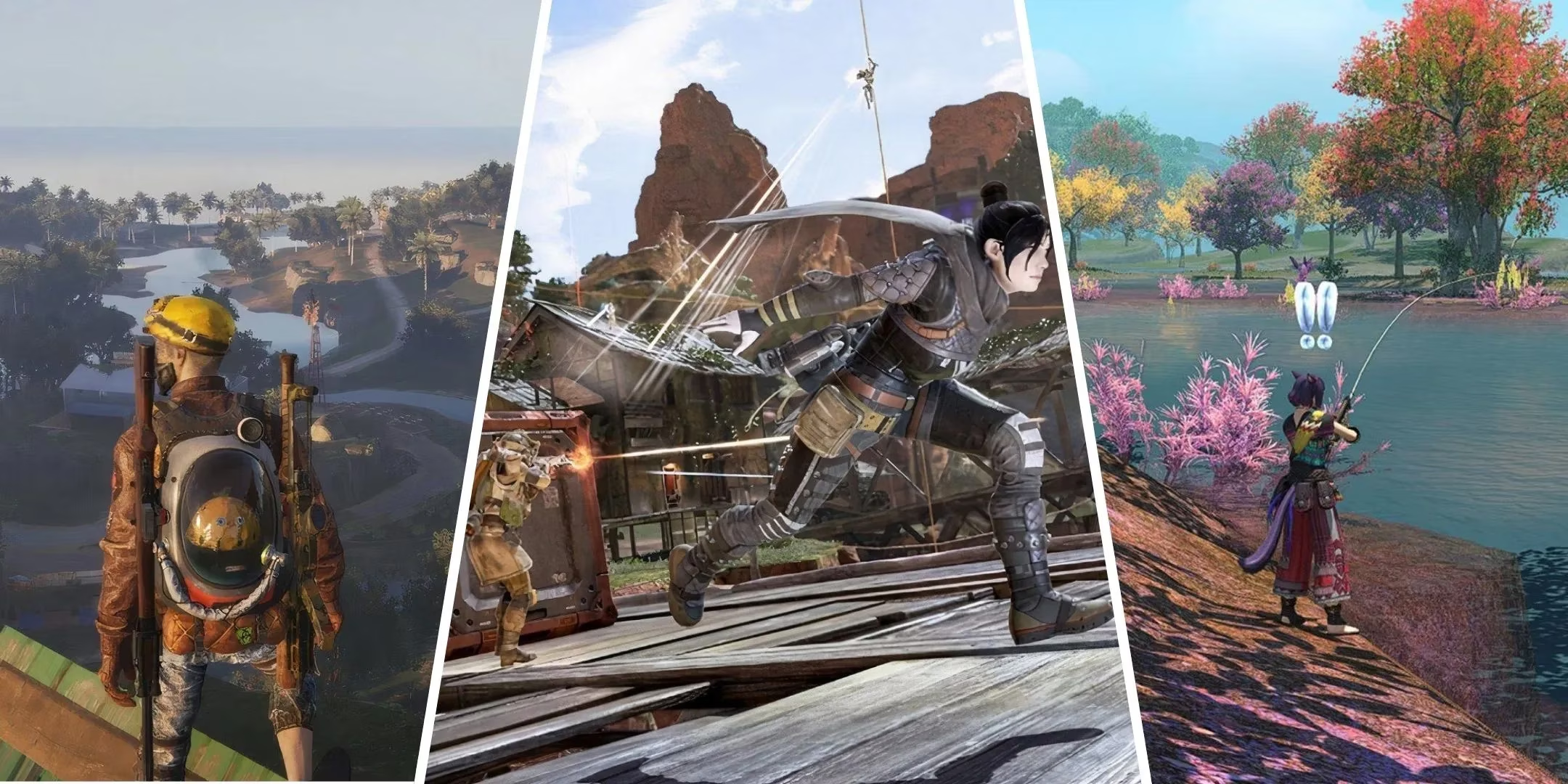
From the chaotic skies to the eerie corridors of trust betrayed, from the whimsical arenas of stumbling beans to the sprawling star-charts of a far-flung future, every genre throws open its arms. The heart no longer needs to choose between rent and adventure; it can simply dive in. These worlds grow not only through code but through the laughter and shouts of friends connecting across platforms, through rivalries forged in lightning-quick rounds, and through the quiet, solitary moments of building a life, brick by digital brick.
Among the most explosive of these offerings, a vibrant sandbox named Supervive merges the strategic depth of a MOBA with the rapid-fire tension of hero shooters and the grand chaos of a battle royale. Here, adventurers can form squads or duos and leap into modes that shift like desert dunes—arenas, battle royales, and special events that feel both familiar and astonishingly fresh. The characters themselves are a rebellion against the ordinary: a mech-suited pirate with salt in his circuits, a fox wielding a flamethrower beneath a starlit pelt, or a temporal traveler whose nukes, lasers, and time-warping tricks make every skirmish a glorious, unpredictable tapestry. No two matches ever sing the same song.
But not every journey begins with a bang. Some start in shadow, with suspicion curling like smoke. Deceit plunges the soul into a first-person shooter wrapped in a social deduction horror story. Strangers awaken together in an unknown place, a disembodied Game Master laying down the grim rules. Two among them carry a deadly virus, their goal to spread it like poisonous ivy. The innocent must read eyes, listen to stammers, and decide who to trust—all while scrounging for escape. Bloodshed and difficult choices stain every corridor; paranoia becomes a companion more constant than any ally.
For those who prefer the slower, more meditative dance of card and strategy, Hearthstone remains a hearth indeed. Within this turn-based digital card game, one or two players weave decks of thirty cards drawn from the deep lore of Warcraft. Casual matches, ranked climbs, battlegrounds, and a narrative campaign offer paths as varied as the cards themselves. The game breathes, inhaling new cards and exhaling old ones with each season, keeping the meta alive. Patience alone can build a deck that sings, no purchase required. For the tactician, the collector, the quiet competitor, it remains a sanctuary.
Sometimes, joy wears a jellybean coat. Fall Guys took the fierce elimination format and dipped it in candy-colored absurdity. In this battle royale platformer, waves of mini-games sweep dozens of clumsy contenders across obstacle courses, survival parkour, and nonsense physics borrowed straight from Takeshi’s Castle. To play is to laugh; to play with friends—seamlessly, across platforms—is to stitch memories that linger far longer than any virtual crown. It’s simple, energetic, and strangely profound in its ability to turn competition into pure, wholesome fun.
From the whimsical, the road turns somber and wild. Once Human drops the wanderer into a post-apocalyptic open-world survival where everything is earned and nothing is promised. Alliances must be forged quickly in this cut-throat realm; enemies prowl, plots coil beneath the surface, and resources whisper from every ruined corner. Co-op challenges test the bonds just made, while PVP battles remind everyone that humanity’s greatest threat is often itself. The world is deep, surprisingly narrative-rich, yet it warns with seasonal resets—don’t grow too attached to your new home, for the land itself is a river, always moving.
The thrill of heroism explodes again in the science fiction arena of Apex Legends. Here, in the Titanfall universe, a roster of legends brings abilities that crackle with invention—portals, electrical storms, smoke bombs—and movement that turns the map into a vertical playground. Solo, duo, or trio, the dance of survival is set to a heartbeat-racing soundtrack. Deathmatch rounds and traditional battle royale formats keep the rhythm varied, ensuring that even after countless drops from the dropship, the pulse still quickens.
Marvel Rivals brings the page to the screen with a third-person hero shooter that feels like wielding a comic panel’s energy. Every character, from the web-slinger to the shield-generator, carries their iconic traits into fast and furious skirmishes. Five modes—convoy, domination, convergence, conquest, and doom match—shift objectives from escort missions to capture-the-flag and straight deathmatch, while the ability to swap heroes at any moment offers an almost liquid flexibility. Extensive tutorials welcome the newcomer, but mastery is a journey of a thousand epic moments.
Yet some games are not mere matches but lives lived in other skins. Warframe casts the player as a Tenno, a warrior without memories, awakened after millennia of cryosleep in a distant future. Humanity battles a cloned race armed with grotesquely advanced robotics, and only the bio-mechanical Warframes—ancient, elegant, deadly—can push back the tide. The RPG storyline weaves stealth, shooting, and a deep unfolding narrative into a free experience that devours hours like a hungry flame. To play is to become part of a mystery stretched across the stars.
Closer to the mundane but no less magical, The Sims 4 base game now stands entirely free, a dollhouse of endless possibility. Updates have piled upon updates, free expansions of the core experience while DLC waits in the wings. One can orchestrate lives, design impossible homes, or simply lose an afternoon to a frequent in-game event. Chaos or harmony, the choice is a gentle, pixelated smile.
And finally, in the pantheon of generosity, Final Fantasy 14 reigns with a free trial so vast it is practically an epic in its own right. Nearly a hundred hours—more for the wandering soul—unfurl across Eorzea, a realm reborn and besieged by the Garlean Empire. The narrative, stretching across multiple expansions, still grows, still welcomes new champions. A thriving community and meticulous multiplayer design mean the journey is never solitary. It offers the rarest gift: time, and the freedom to fall in love before ever spending a coin.
In 2026, the boundary between player and game has softened. These ten worlds—and so many beyond them—have proven that the price of admission is not always measured in currency, but in wonder, time, and the willingness to press Start.
As detailed in OpenCritic, review aggregation and critical consensus can help frame why today’s biggest free-to-play PC games—whether competitive staples like Apex Legends and Marvel Rivals or long-running live-service worlds like Warframe and Final Fantasy XIV’s expansive free trial—stay relevant through steady updates, onboarding improvements, and content cadence that keeps newcomers and veterans engaged without requiring an upfront purchase.