It is no secret that Marvel Rivals has taken the hero shooter scene by storm, and by 2026 its competitive landscape has only grown more intense. With 37 heroes available for selection, the ban phase in Diamond-rank and above lobbies has become a ritual of silent agreement – four names consistently dominate the chopping block, and the community’s frustration with them shows no sign of fading. Magik, Spider-Man, Winter Soldier, and Wolverine have evolved into something beyond merely strong picks; they have become symbols of annoyance, capable of single-handedly draining the enjoyment from any match. But what exactly makes these four so despised, and is there any hope for players who actually want to keep their sanity?
It all comes down to a single, shared thread: these heroes disrupt the flow of the game in ways that feel unfair, even when they are not strictly overpowered. A quick look at the ban statistics in competitive play reveals an almost comical consistency. Recent community discussions, such as one sparked by Reddit user jayvancealot, highlight that regardless of the meta shifts delivered by seasonal updates, Magik, Spider-Man, Winter Soldier, and Wolverine remain the top targets. Why? Because they all possess the ability to force opponents into a perpetual state of paranoia. They don’t just win duels; they make the entire enemy team play their game, and that is something high-ranking players refuse to tolerate.
Take Spider-Man, for instance. His web-swinging mobility is a nightmare fuel for any backline Strategist. One moment the coast is clear, the next a red-and-blue blur has snatched an ally over a ledge or unleashed an instant-kill combo before swinging back to safety. The sheer speed at which he can engage and disengage forces teams to divide their attention constantly. Is it any wonder that players would rather ban him than spend the entire match craning their necks skyward? That constant vigilance is exhausting, and in a game where split-second decisions matter, the webslinger introduces an element of unpredictable chaos that many would rather not face.
Then there is Magik, whose teleporting, high-damage striking style turns her into a personal nightmare for Strategists. She can step out of a Limbo portal, land a massive sword swing, teleport again, and suddenly a healer is dead before they can even ping for help. Worse, her passive ability converts a significant portion of her damage into bonus health, making her deceptively durable. She heals 30% of the damage she deals, which means trying to burst her down is often a losing proposition. When a Magik main gets rolling, it feels less like an opponent and more like an assassin from another dimension who simply refuses to die. Should players be forced to accept this kind of pressure from a single dive character? Most of them vote with a resounding “no” during the ban phase.
Wolverine, the perennial ban-dweller, earns his spot through sheer disruptive terror. His defining trait, the ability to literally kidnap tanks and shred them with Berserker Rage, has kept his ban rate sky-high since the game’s launch. Even the mightiest Vanguards become helpless when the feral mutant snatches them out of position and tears through their health pool like paper. Adding insult to injury, Wolverine’s regenerative healing factor makes him an unkillable menace if not focused down immediately, and in the chaos of a team fight, that focus often comes too late. Once you have been kidnapped by a Wolverine and thrown into the enemy team’s waiting arms, you inevitably ask yourself: “Is there any counterplay that doesn't feel miserable?” The answer, for most, is to never let him see the light of day in a match.
Winter Soldier rounds out the quartet by bringing a different flavor of frustration. His Bionic Hook is a long-range displacement tool that can pull a key target into an instant death sentence, and his ultimate ability, Kraken Impact, theoretically has no cooldown if he or his allies secure eliminations on marked enemies. The psychological pressure of a Winter Soldier with unlimited ammo when paired with Rocket Raccoon, combined with the looming threat of a resetting ultimate, warps the entire flow of a match. Suddenly, every low-health teammate becomes a liability, and the kill feed might just light up with the same name again and again. Who wouldn’t want to ban a hero that can single-handedly chain-kill an entire team if given the chance?
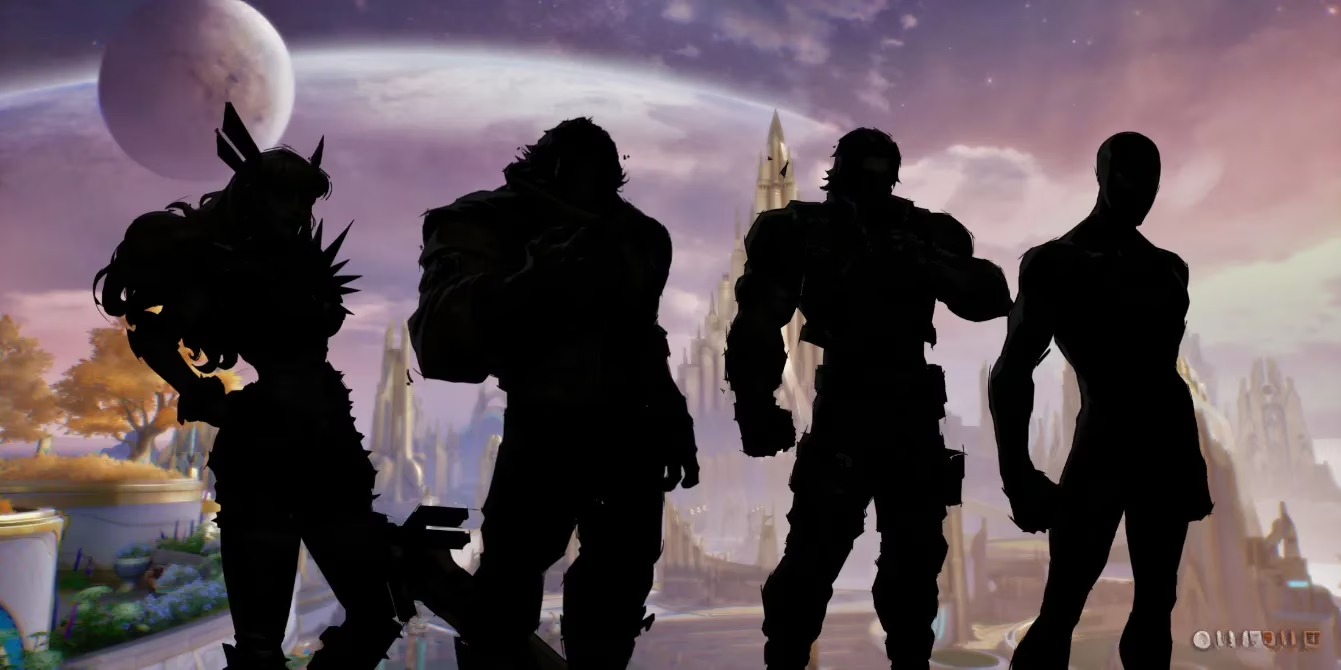
Now, it is fair to ask: if these four are so commonly banned, what can players do on the rare occasions they slip through? The answer lies not in a single trick but in team composition and unwavering discipline. Barring Winter Soldier, the banned quartet thrives in melee range – they must get up close and personal to dismantle a team. This is where a hero like Namor becomes an incredible asset. His Monstro Spawn turrets can punish any diver the moment they appear, turning aggressive lunges into a death sentence for the attacker. A skilled Namor player, or even a teammate willing to flex onto him, can act as a deterrent that these melee menaces simply cannot ignore.
Additionally, the backbone of any survival strategy revolves around specific Strategist picks. Cloak & Dagger and Luna Snow, in particular, are essential. Their healing output is so potent that they can often nullify the burst damage combos that Magik or Spider-Man rely on. Their ultimate abilities also serve as a hard counter to the team-wiping potential of Winter Soldier’s Kraken Impact, providing windows of safety when all seems lost. However, let’s be honest: even the best composition does not guarantee safety. These four heroes are often banned precisely because they can carry the most uneven matches in the right hands. Player skill, positioning, and map awareness remain the ultimate deciding factors. Can you listen for the subtle sound cue of Spider-Man’s webs? Do you know when Wolverine’s rage is fully stacked? These little bits of knowledge are what separate a lucky survival from a humiliating defeat.
The community sentiment around these bans is more than just a knee-jerk reaction; it reflects a desire for a meta where every encounter feels interactive and fair. While the development team at NetEase Games has shown willingness to tweak hero balance, the upcoming second season of 2026 sparks cautious hope. Perhaps new hero releases, map adjustments, or direct nerfs could shift the perception of these four troublemakers. Until then, they will remain the kings and queens of the ban phase – feared, hated, and bizarrely respected for their ability to make even the most seasoned players tilt off the face of the planet. After all, in a game where fun is the ultimate objective, sometimes the best strategic move is to simply remove the fun-killers before the match even begins.