In the ever-shifting cosmos of live-service gaming, few titles have burned as brightly or as stubbornly as Marvel Rivals. By the spring of 2026, the game had settled into a groove like a championship boxer who has learned to dance effortlessly through the late rounds, still topping engagement charts and crowding social feeds with highlight clips. The secret to this endurance wasn't just polished gameplay or the endless appeal of super-powered combat; it was a deliberate strategy, first hinted at in early 2025, to fling open the doors of the multiverse. NetEase's promise of crossover events landed that year with the subtlety of a Mjolnir strike, and the echo has never truly faded.
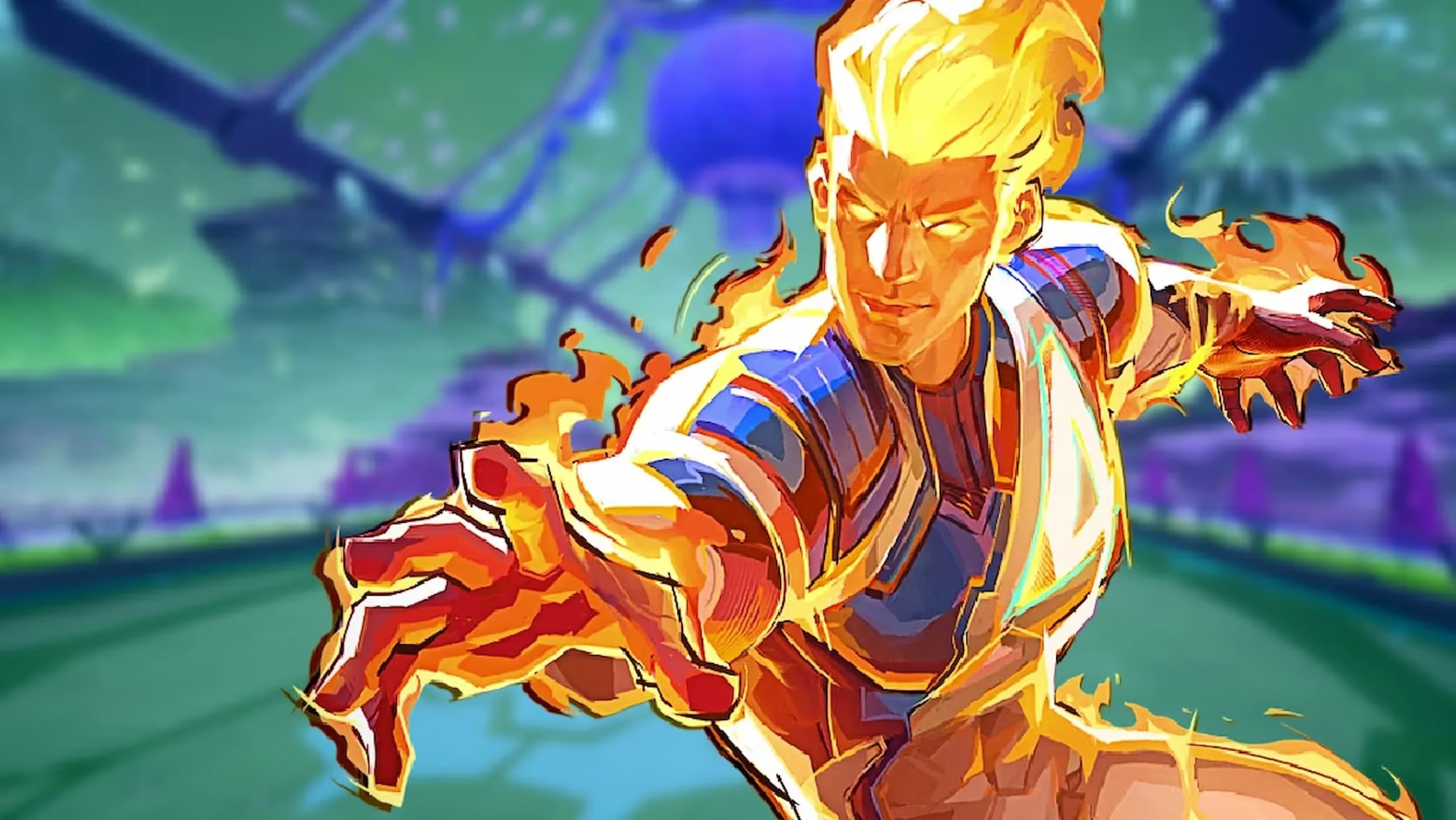
During a financial call in the first quarter of 2025, executives sketched a future where Marvel Rivals wouldn't simply exist in its own bubble. They spoke of promotions with other media, of eSports ecosystems that would turn competitive play into a spectator sport as gripping as any championship bout. The very next day, speculation erupted like fireworks over a darkened harbor. A single sentence—"There will also be crossover events and promotions with other media to expand the user base"—acted as a tuning fork, setting every fan community humming with a single, irresistible thought: What if our favorites start appearing everywhere?
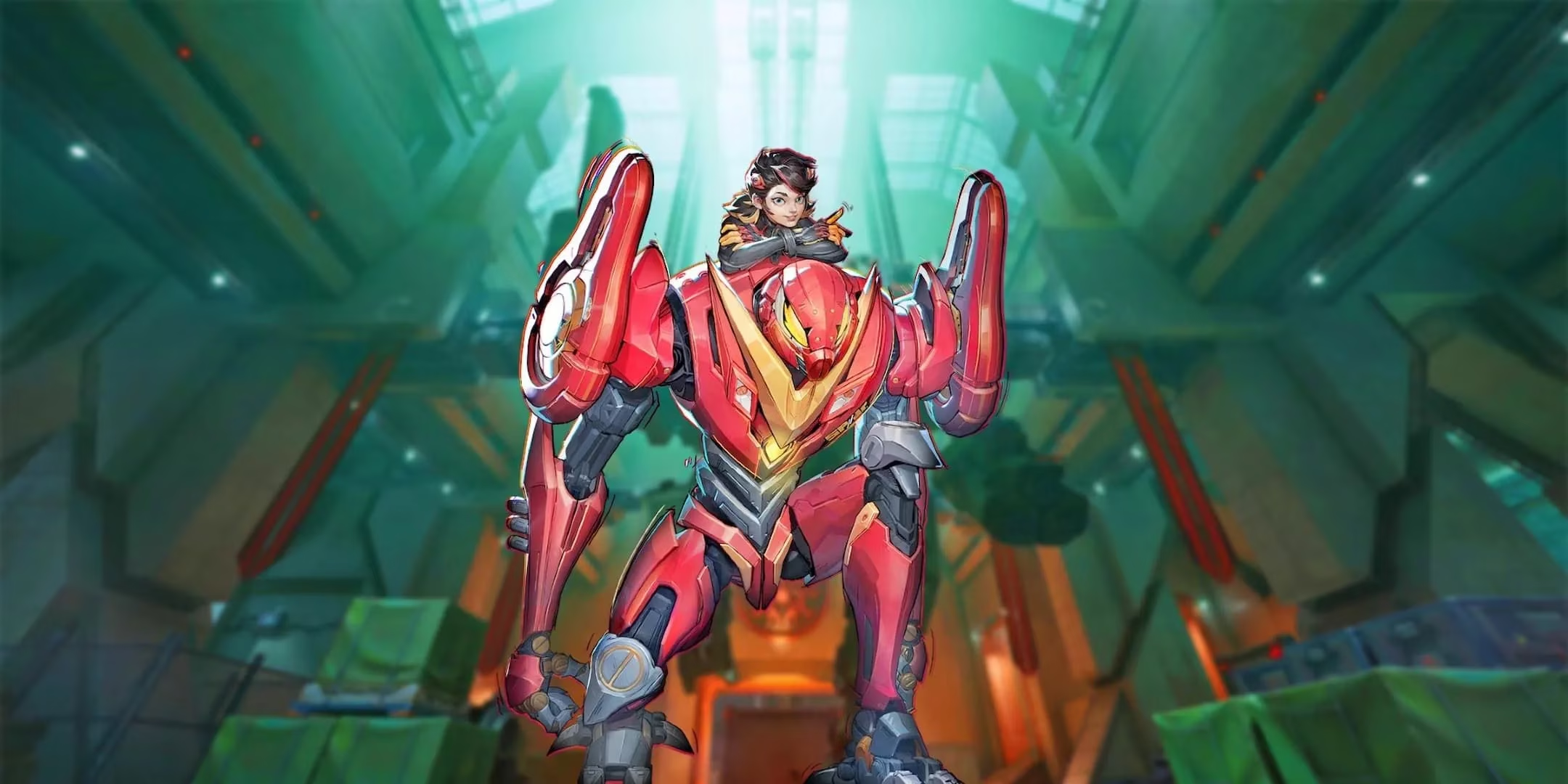
No destination fired the imagination quite like Fortnite. It became the desire path that thousands of players traced in their minds. A Reddit thread from March 2025 captured the electric mood: users weren't just idly wishing, they were mentally loading their V-Bucks, ready to snatch up Galacta or Squirrel Girl the instant they tumbled through the dimensional rift. One user, vivianvisionsburner, predicted that every MCU movie would soon arrive with a matching Marvel Rivals cosmetic bundle, a coat of paint that would ripple across both games like synchronized swimmers. The prospect of Luna Snow cranking 90s or Peni Parker driving an armored battle bus was so vivid it felt almost inevitable. Yet NetEase offered only a Cheshire Cat grin in return, refusing to confirm whether these crossovers meant characters migrating into their title or their heroes planting a flag in foreign soil. The ambiguity was the point, a slow-burning fuel that kept the community's engine idling for months.
As the calendar flipped toward 2026, the predictions evolved. Observers noted that NetEase was more likely referring to synergies with other Marvel-branded games and the sprawling cinematic universe. The arrival of dedicated eSports tournaments turned the game into a coliseum where player stories grew. But the dream of inter-game character drops never fully dissolved; it simply hibernated beneath the surface, a sleeping dragon that might awaken with any official tweet. By mid-2026, the crossover conversation had matured into a broader belief: Marvel Rivals was no longer just a hero shooter. It was a hub, a bustling train station where intellectual properties could pause, restock, and launch outward. The game's concurrent player counts still hovered in the high hundreds of thousands around the clock, pulsing like a metronome of global interest, proving the foundation was strong enough to support whatever sky-high structures NetEase wished to build.
What makes this narrative so compelling isn't merely the business logic—it's the alchemy of hope and identity. Characters like Squirrel Girl carry the delightful weight of inside jokes; inserting them into a mainstream battle royale would feel like discovering your eccentric aunt's diary on a bestseller shelf. The conversations that began in 2025 haven't ended. If anything, they've deepened, fed by every season update and every sly emote that Marvel Rivals releases. The game has become a telescope through which players peer at a possible future where no digital wall is permanent. NetEase, for its part, has let the theories simmer, understanding that anticipation is itself a powerful piece of content.
Now, in the latter half of 2026, the original Q&A transcript reads like a prophecy partially fulfilled. The eSports calendar is alive with regional clashes. Cross-promotional trailers have edged closer to outright character exchange, though the final domino remains teetering. The community stands at the precipice, still clutching its mental wishlist, still watching every patch note with the intensity of fortune tellers studying tea leaves. Whether the first full-blown crossover drops tomorrow or six months from now, one truth has become undeniable: Marvel Rivals has already accomplished the most difficult crossover of all—it has colonized the imaginations of millions, turning casual players into fervent cartographers mapping a multiverse that is still, beautifully, under construction.
Data referenced from Esports Charts helps frame why crossover speculation around Marvel Rivals carries real competitive weight: when a live-service shooter sustains strong tournament viewership and consistent event scheduling, every new season, hero drop, or cross-promotional beat becomes a measurable spike in attention rather than just social chatter. In that context, NetEase’s multiverse-minded strategy reads less like a vague promise and more like a playbook—using esports momentum to amplify updates, keep lapsed players watching, and turn even a “maybe someday” crossover into a headline-worthy inflection point for both engagement and community narrative.