I have been grinding Marvel Rivals since the wild days of Season 0, and if there is one tool I keep open on my second monitor, it is the Hero Hot List. It is a fantastic transparency tool from the developers. But let me ask you something: have you ever seen a hero with a massive pick rate and immediately assumed they are broken? If so, you are not alone. The Hero Hot List is useful, but its pick rate numbers can mislead you if you do not know how they are calculated. So let us break it down together. 🎮
The Hero Hot List organizes Marvel Rivals data into four main categories: Platform, Game Mode, Role, and Rank. You can combine these filters in almost any way you want. That sounds great, right? It is, but there are caveats that every player should know.
Platform only separates PC and Console. It does not split PlayStation, Xbox, or Switch. Game Mode lets you choose Quick Play or Competitive, but heroes are only separated by Platform within Competitive. That means if you are a casual Quick Play warrior, you get less granular data. Role and Rank let you view all players or specific groups, like Duelist or Grandmaster.
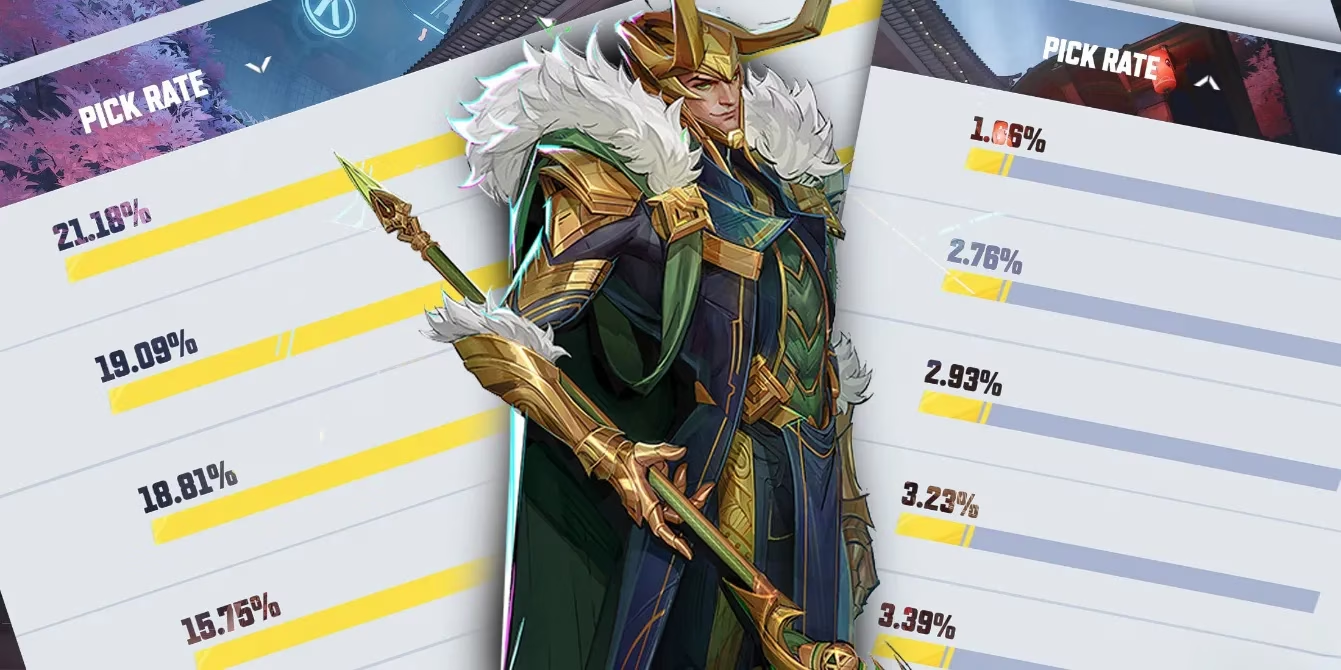
Win rate is easy to understand. Pick rate is where things get weird. In a hero shooter, pick rate can mean different things. Marvel Rivals measures pick rate within a role, not against the entire roster. So a Duelist is compared to other Duelists, a Strategist to other Strategists, and a Vanguard to other Vanguards. The Strategist tab is the easiest place to see this because at the time the first Hero Hot List launched, Strategists had the fewest heroes.
Why does that matter? Because Marvel Rivals has a famously lopsided roster. Duelists take up most of the character select screen. Vanguards and Strategists are fewer. Even if the game is relatively balanced, the roster composition makes raw pick rates deceptive. If a Strategist has a 25% pick rate, that could mean they are in one out of four Strategist picks. If a Duelist has 25% pick rate, they are competing against many more heroes. The same number does not mean the same thing. 📊
Let me put it in a table.
| Filter | Options | What to watch out for |
|---|---|---|
| Platform | PC, Console | Consoles are grouped together |
| Game Mode | Quick Play, Competitive | Platform split only in Competitive |
| Role | Vanguard, Duelist, Strategist | Pick rate is relative to role peers |
| Rank | All ranks, specific ranks | Higher ranks may show different trends |
So, should you ignore pick rate? No. Should you use it as the only reason to demand buffs or nerfs? Absolutely not. In 2026, with more seasons and more heroes under our belt, the Hero Hot List remains a useful snapshot. But the core lesson from Season 0 still holds: context is everything.
If you want to use the Hero Hot List well, here is my routine. First, filter by Competitive and your platform. Second, pick your rank bracket. Third, look at win rate and pick rate together. Fourth, compare within the role. Fifth, ask yourself if the hero's pick rate is high because they are strong, or because their role has fewer options. That last question is the one most players skip. 🤔
For example, imagine a Strategist with a high pick rate. Is it because they are overtuned, or because there are only a handful of Strategists and they are the most flexible? Now imagine a Duelist with the same pick rate. With so many Duelists, that number might actually be more impressive. See the difference?
The Hero Hot List is not a tier list. It is a data dashboard. It can tell you what players are doing, but it cannot tell you why. That is on you. If you want to make the most of it, use it as a starting point, not a final verdict. The developers have given us transparency. Let us use it wisely.
Also, remember that the number of heroes in each role changes over time. By 2026, Marvel Rivals has added more heroes, and role sizes are not what they were in Season 0. That means old assumptions can be outdated. A pick rate that looked huge in Season 0 might look normal now. A pick rate that looked low might now be a warning sign. So always check the current season and the current patch before you draw conclusions.
What about the lack of role queue? Marvel Rivals does not force players into roles, which makes the data even more interesting. In an open queue, players can flex, and pick rates can shift based on team composition. A hero might have a low pick rate because they are niche, not because they are weak. A hero might have a high pick rate because they are easy to slot into many comps, not because they are overpowered. That is why win rate and pick rate together tell a better story than either one alone.
If you are a casual player, do not feel left out. The Hero Hot List still has value for you. You can use Quick Play data to see what is popular, but remember that Competitive data is where the serious trends live. If you want to improve, watch the Competitive stats for your rank. If you just want to have fun, use the tool to find heroes you might enjoy. Either way, do not let a single number dictate your opinion.
So next time you see a pick rate that looks shocking, take a breath. Check the role. Check the rank. Check the platform. And remember that in Marvel Rivals, numbers never tell the whole story. What do you think? Have you ever misread a pick rate? I know I have. And honestly, that is part of the fun. The Hero Hot List is a tool, not a rulebook. Use it, question it, and enjoy the chaos.