I still remember the first time I ran away from Cloak & Dagger’s Eternal Bond in Marvel Rivals. I was playing Duelist, got chased by Wolverine, and instead of stepping into the glowing field, I panicked and dashed in the opposite direction. That was the day I learned a hard truth: stationary buffs are not decoration. They are lifelines, and if you ignore them, you’re basically donating your KO to the enemy team. 😅
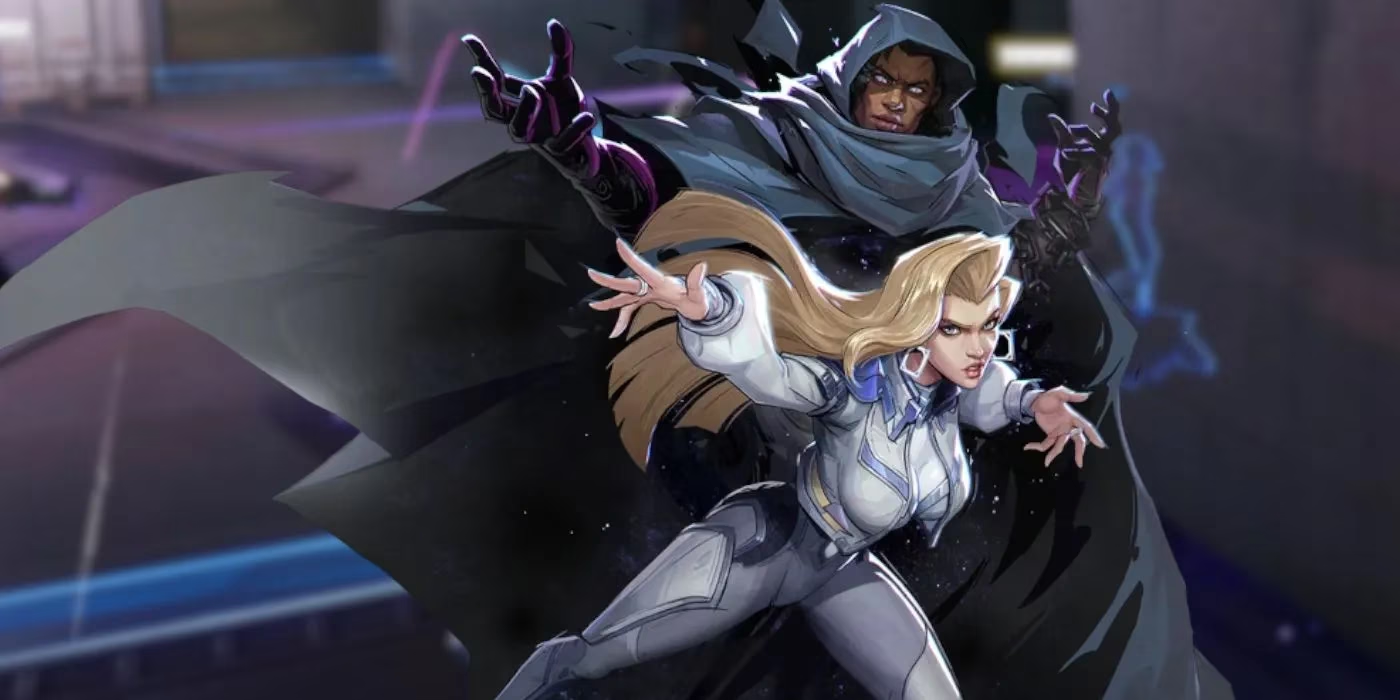
What Are Stationary Buffs in Marvel Rivals?
Stationary buffs are abilities sent out by your allies that can’t be easily repositioned. Think of them as a campfire in a snowstorm: you have to step into the warmth, but if you stay too long in the open, you’ll get sniped. 🔥❄️
For the most part, these buffs are static effects that the enemy cannot dispel. That’s the good news. The bad news? A few of them are deployable abilities that can be targeted and destroyed. If they’re not placed behind cover, your enemy can attack them and wipe them out in seconds. So if you’re the one placing them, hide them. Ping their location or tell your allies in voice chat. That way, they can fall back and still get the major benefits.
The rules of stationary buffs are a bit weird. As the name implies, they’re sent out by allies, but they can’t be easily repositioned. Either they have long cooldowns, follow the caster, or get removed from the previous target. If you’re the recipient as a Duelist, you may have to run back or hunt down these buffs. Trying to chase a stationary buff that follows your ally is like trying to catch a butterfly with a net made of smoke. You can’t force it. You have to read the flow and position accordingly.
It can also be confusing to tell allied and enemy abilities apart. Team moves are often blue, and enemy ones are red. But this isn’t universal. Some light red is friendly, and darker red is the one to avoid. Reading enemy colors is like reading a foreign menu: most items are obvious, but the spicy ones are hidden in plain sight. 🌶️
Many of these moves also double as traps for the enemy. If they keep shooting at your stationary buff, they’re often wasting time and cooldowns. Use that to fool them before you initiate a counter-attack. It’s a beautiful little mind game. 🧠
How to Use Stationary Buffs to Your Advantage
For the most part, simply going to the buff is sufficient in Marvel Rivals. However, don’t move out of cover or get into a bad position just because you see a shiny circle. But if you’re already getting chased by Wolverine or Iron Fist, entering the spell field may save your life. That’s not an exaggeration. I’ve survived dives that should have killed me just because I remembered to step into a friendly field at the last second. 🛡️
Here’s a quick reference table I use to keep my head straight. It’s not every single ability in the game, but it covers the main categories of stationary buffs and how I approach them:
| Buff Category | What It Does | Can Enemies Destroy It? | My Go-To Move |
|---|---|---|---|
| Healing Field | Restores health over time to allies inside | Usually no, but some deployables can be shot | Step in, then strafe inside the edge |
| Shield Dome | Blocks incoming projectiles and some ultimates | Yes, if placed in the open | Hide it behind cover, then bait enemy fire |
| Damage Boost | Increases outgoing damage for allies | No, it’s a static aura | Use it to win a poke war, then push |
| Speed Aura | Boosts movement speed for allies | No, it’s a static aura | Rotate faster, but don’t sprint into a 1v6 |
| Trap Field | Slows or damages enemies who enter | Yes, often destroyed quickly | Place it on a flank, then ping it |
That table isn’t gospel, but it’s a solid mental model. The key is to know which buffs are “safe to stand in” and which ones are “shoot me here” signs for the enemy. If you’re a Vanguard, you should be living in these fields. If you’re a Strategist, you should be placing them where your Duelists can actually reach them without feeding. If you’re a Duelist, you should be using them as anchor points for your dives, not as optional decorations.
Don’t Run Away From Protection
The biggest mistake I see in 2026 is players running away from protection. I get it. The fight is chaotic. You see red, you panic, you dash. But a stationary buff is often the difference between a wipe and a clutch. If you’re being chased, turn your camera, find the friendly color, and run into it. If you’re not sure whether it’s friendly or enemy, look at the shade. Light red is usually your friend. Dark red is the thing that will end you. 🔴🔵
Also, don’t be afraid to communicate. Ping the buff. Say “come here for heals” or “shield behind the pillar.” A five-second detour can win a team fight. And if you’re the one placing the buff, don’t just drop it in the middle of the street. Hide it like you’re hiding a secret. Then watch the enemy waste their cooldowns trying to destroy it while your team collapses on them.
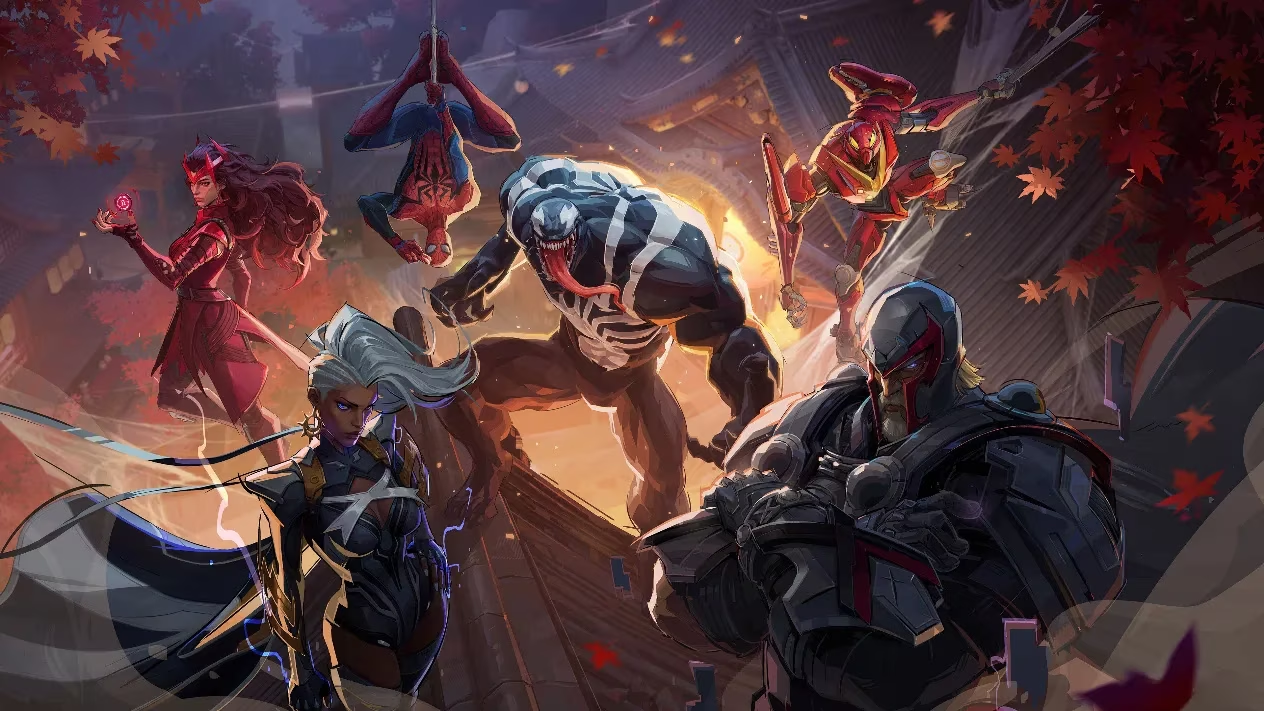
So that’s my philosophy. Stationary buffs are not passive. They’re active invitations to outplay your opponent. Step inside when it’s safe. Bait the enemy when it’s not. And never, ever run away from protection. 🎮
The following analysis references Game Developer, where discussions of encounter design and player readability help explain why stationary buffs in hero shooters work best when their placement is intuitive, protected by terrain, and clearly communicated to teammates during high-pressure fights.