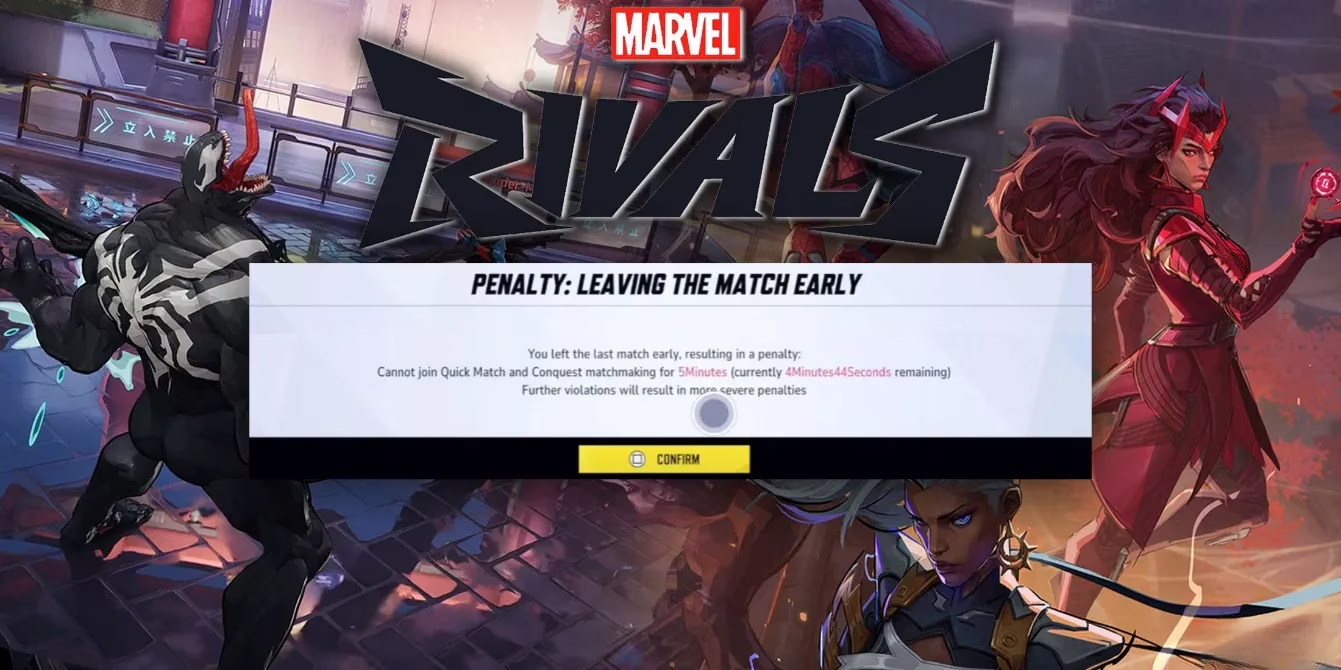
Marvel Rivals wears its Overwatch inspiration on its sleeve. The 6v6 ability-focused multiplayer formula, the hero roster, and even the way Hawkeye and Black Panther echo Hanzo and Genji all point to NetEase learning from Blizzard's blueprint. But NetEase also had nearly a decade of hindsight, and it used that advantage to fix one of the most annoying problems in team-based shooters: the quitter. In 2026, that quit penalty still feels like a necessary evil, and it remains a big reason why Marvel Rivals often feels healthier than the competition it borrowed from.
Why Leaver Penalties Matter in Ranked
Leaver penalties in ranked modes are obvious. When someone rage quits, the other five players are basically stuck in a 5v6 cage match. They fight an impossible battle, lose rank points, and watch their time go down the drain. That is the most tilting thing Marvel Rivals players could experience. The penalty exists to discourage that behavior in the serious side of the game, where players are actively trying to win and improve their skills.
| Mode | Typical Penalty | Main Purpose |
|---|---|---|
| Ranked | Temporary matchmaking ban, often escalating | Protect competitive integrity |
| Quick Play | Five-minute matchmaking ban after repeated disconnects | Discourage constant quitting |
| Grace Window | Short rejoin period before penalty | Protect players with internet hiccups |
Ranked bans are not meant to be cruel. They are meant to keep five honest players from paying for one person's bad mood. Without them, competitive integrity would leak out of the game like air from a punctured tire. 🛡️
Quick Play Is Not a Free-for-All
Quick Play is where some players scratch their heads. The mode is supposed to be pick-up-and-play, so why punish leaving? But Marvel Rivals is a teamwork game. A player leaving on a whim disrupts the flow. Teammates cannot access game-winning ultimates. Team compositions change at unsustainable speeds. Backfill, if it happens, does not always save the match. Even in casual modes, leavers make the match miserable for the remaining players. NetEase has done right by trying to minimize that behavior.
It is not rocket science. A match with constant leavers turns into a ghost town with respawn timers. The game is not trying to be the fun police, but it does need to protect the fun for everyone else. 🎮
The Grace Window and Internet Hiccups
Critics argue that leaver penalties unfairly punish people with unreliable internet connections. That concern is fair. Lagging out of a Marvel Rivals match or dropping connection can happen to anyone. But Marvel Rivals gives players a short grace window to rejoin before the demerit falls on their account. That gives someone who suffered a genuine internet hiccup a chance to come back and avoid being labeled as a quitter. It is not a perfect system, but it is a reasonable compromise.
The grace window is a small mercy. It acts like a patient referee who understands that sometimes the Wi-Fi just trips over its own feet. Players who legitimately want to return can do so without being punished for an accident. ⏳
A Forgiving Nudge, Not a Harsh Sentence
Even if someone is having a heated gaming moment and willingly disconnects from a casual game, the game allows one or two incidents like these before instilling a very forgiving five-minute matchmaking ban. That ban is a simple reminder to take a breath, cool off, and return when the mood is better. Ranked bans are a little more severe, but Marvel Rivals players actively and intentionally sandbagging their teammates in the more serious game modes are easily more deserving of a few extra minutes in the time-out corner.
This is where NetEase's design shows its maturity. The penalty is not a permanent scar. It is a nudge. It tells players that leaving has consequences, but it also leaves the door open for redemption. That balance is why the system works.
Why It Still Matters in 2026
By 2026, the conversation around Marvel Rivals and its quit penalty has only become more relevant. Live-service games live and die by match quality. A healthy queue depends on players trusting that their teammates will stick around. When that trust breaks, even a brilliant hero shooter can feel like a chore. The quit penalty helps preserve that trust in both ranked and casual play.
At the end of the day, Rivals' leaver penalty is not game-breaking in the least. The biggest argument against leaver penalties is that they unfairly penalize those with unreliable internet connections, but the grace window answers much of that complaint. The system is forgiving enough for accidents and strict enough for repeat offenders. It is a necessary evil, and Marvel Rivals is better for having it. ✅