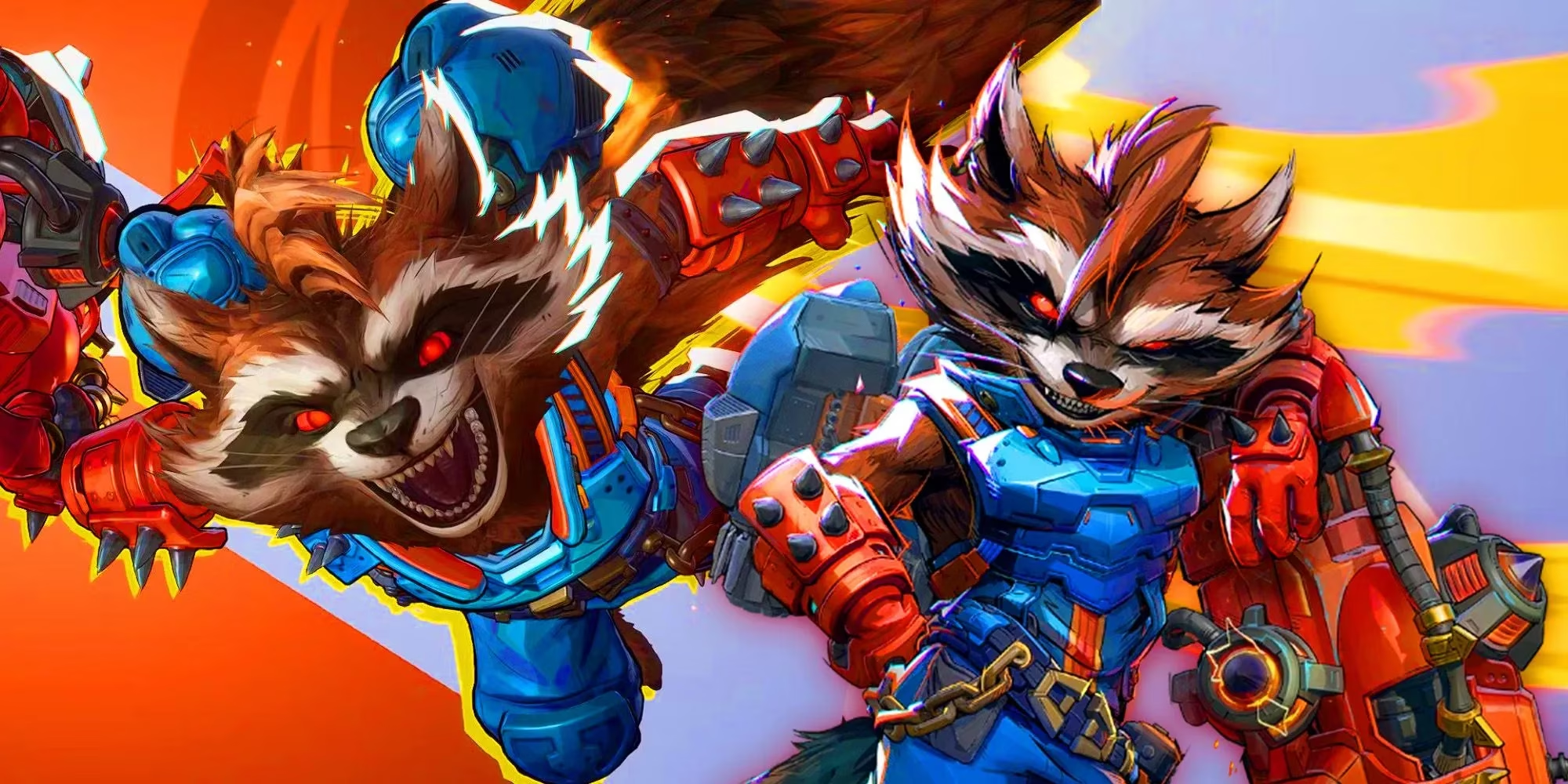
In my 2026 Marvel Rivals matches, I still meet players who treat Rocket Raccoon as a pure heal bot. I understand the first impression: his healing orbs bounce around the battlefield, his beacon gives armor and revives fallen allies, and his ultimate is usually framed as a team survival tool. But after spending more time with him, I cannot keep him in that box. Rocket is a support hero, yet his kit is built for pressure, survival, and opportunistic damage. When I stop staring only at the healing stat and start watching the damage numbers, the raccoon looks completely different. He is not just a mobile health dispenser; he is a tiny, annoying threat who can swing a fight while keeping his team alive.
The Healer Label Is Too Narrow
I get why so many players park Rocket at the edge of a fight. His healing orbs are his most visible contribution, and his beacon is one of the most reassuring tools a support can bring. It gives teammates extra armor, and it can revive a fallen ally, which makes Rocket feel like a safety net. His ultimate also pushes the team toward survival and burst damage rather than personal glory. All of that encourages a passive style: stay back, throw healing spheres, and hope the duelists do the rest.
That view is smart for healing, but it misses his full potential. Rocket has a rapid-fire energy gun that can deal surprising damage, and it is easy to overlook because it does not look as flashy as a dedicated attacker's weapon. The math does not lie. At 16 damage per round and 12 rounds per second, Rocket can reach 192 DPS. In close quarters, that is real pressure. I have caught enemy players off guard simply because they assumed Rocket was only there to heal. They ignored me, stepped too close, and paid for it. That is the trap. Rocket is not a helpless backline support; he is a support who can punish anyone who underestimates him.
Where the Damage Comes From
What I like most about Rocket is that his offense is not a separate gimmick. It grows naturally out of his role. I can keep healing orbs moving toward teammates, watch the fight, and then switch to my gun when an enemy dives too far or a low-health target shows up in my line of fire. His small size makes him hard to track, and his agility lets me reposition to safer angles. I do not need to stand still and trade shots like a frontline damage dealer. I can be a nuisance, chip away at enemies, and disappear before they can punish me.
| Tool | How I Use It | Why It Matters |
|---|---|---|
| Healing orbs | Keep teammates topped up during pushes | Sustains the team and buys time |
| BRB beacon | Place it near the fight for armor and revival | Creates a second chance and stabilizes dives |
| Energy gun | Fire at close range when enemies overextend | Adds 192 DPS of unexpected pressure |
| Bombard Mode | Threaten enemies who get too close | Makes Rocket dangerous in duels |
| Ultimate | Boost team damage by 40% | Turns a good push into a lethal one |
That table is the version of Rocket I wish more players saw. He is not a one-button healer. He is a support with a real damage threat, and that threat changes how enemies have to approach him. If they ignore me, I can add damage. If they chase me, I can use my mobility to waste their time. If they focus my teammates, my healing and beacon keep the team in the fight. That is a lot of value from one small hero.
The Balance I Had to Learn
Still, I do not think Rocket should be played as a pure damage dealer. It is tempting to lean into his gun and Bombard Mode, especially when the damage numbers start climbing, but his main job is keeping the team alive. A good Rocket player knows that the biggest contribution is often keeping others in the fight. I have lost games because I chased damage at the wrong moment, and I have won games because I stayed disciplined, tracked my teammates' health, and used my agility to reach someone who was about to die.
There are moments when a quick attack is correct. If an enemy is low, unaware, or out of position, firing a few energy projectiles can be smart. But that decision has to come from awareness, not greed. I need to know where my teammates are, who is under attack, and whether my beacon is ready for a revive. Focusing only on damage exposes the team and reduces Rocket's overall effectiveness. The best balance is simple: heal first, watch for chances, and use damage to support the healing rather than replace it. A well-played Venom, for example, can eliminate Rocket quickly if I forget my limits. I am not a frontline brawler. I am a support who knows when to bite.
Does Rocket Really Need a Buff in 2026?
Every game has players who want their favorite character buffed, and Rocket is a popular pick for that conversation. I understand the frustration. Rocket cannot heal while attacking, which makes him feel vulnerable in a fast, damage-heavy match. But that vulnerability is part of the support trade-off. Support heroes are designed to help the team and keep people alive, not to out-damage every duelist. Wanting Rocket to do more damage feels like a misunderstanding of his role, because he is already effective on his own.
He has healing, armor, revival, mobility, and a 40% team damage boost through his ultimate. Asking for more could push him into overtuned territory. If Rocket becomes too strong as a damage dealer, he could disrupt the balance that makes team compositions work. He would become a must-pick meta character, and that is not fun for everyone else. In 2026, I do not think Rocket needs a buff. He needs players who understand his full kit.
Is Rocket a Contender for Best Support?
I think he is absolutely a contender. Rocket's role is support, but his abilities offer much more than passive healing. Unlike many healers who stay in the back and rely on their team to protect them, Rocket has tools that let him heal and actively fight. His Bombard Mode can deal significant damage to enemies who get too close, his small size makes him hard to target, and his agility lets him support from different angles. His beacon gives teammates armor and speed bonuses while also offering a revive, and his ultimate boosts team damage by 40%. That is a powerful package.
When I compare Rocket to other supports, I do not see a weak healer who needs to hide. I see a flexible playmaker who can sustain, revive, reposition, and punish overconfidence. He is not the best choice for every situation, and he still demands discipline, but he is far more than the heal bot label suggests. 🚀 In my view, Rocket Raccoon is one of the strongest supports in Marvel Rivals, and players who treat him as only a healer are leaving a surprising amount of power on the table.